How much professional carpet cleaning cost on average?
How often should professional carpet cleaning happen?

How often should professional carpet cleaning happen?
Carpet usually tells the truth before the rest of the room does. If it looks dull, feels sticky underfoot, or keeps holding onto pet odors no matter how much you vacuum, it is probably past due for a deeper clean. That is why so many homeowners and business owners ask how often professional carpet cleaning should really be scheduled - and the honest answer is that it depends on how your space is used.
A good rule for most homes is every 12 months. That keeps soil from settling too deeply into the fibers and helps carpets last longer. But for busy households, pet owners, allergy-sensitive families, and commercial spaces, once a year may not be enough.
How often should professional carpet cleaning happen?
For an average household with light to moderate foot traffic, professional carpet cleaning once every 12 months is a solid schedule. It removes the dirt and residue that regular vacuuming leaves behind and helps freshen the entire room.
If your home has children, multiple adults, or frequent visitors, every 6 to 9 months is often a better fit. Daily life brings in more soil than most people realize. Shoes track in grit, spills settle below the surface, and carpet fibers hold onto dust and allergens over time.
For homes with pets, many carpets benefit from professional cleaning every 3 to 6 months. Pet hair is only part of the issue. Accidents, body oils, dander, and lingering odor can all build up in ways that home machines do not fully remove.
Commercial properties usually need more frequent service. Offices, waiting areas, retail floors, and rental common areas often do best with cleaning every 3 to 6 months, sometimes even more often in high-traffic zones. In business settings, carpet affects both appearance and indoor cleanliness, so waiting too long can make the whole space feel neglected.
The biggest factors that change your carpet cleaning schedule
The first factor is foot traffic. A spare bedroom and a main hallway do not wear the same way. Entryways, family rooms, stairs, and office corridors collect more grit, which acts like sandpaper against carpet fibers. The heavier the traffic, the more often professional cleaning makes sense.
The second is pets. Even well-trained pets leave behind dander, tracked-in dirt, and natural oils. If you have a dog that spends time outdoors or an older pet with occasional accidents, your carpet may need attention sooner than the calendar suggests.
The third is allergies or indoor air concerns. Carpets can trap pollen, dust, and other particles. That can be helpful up to a point, but once the buildup gets heavy, every step can stir those particles back into the air. For households trying to maintain a healthier indoor environment, more frequent deep cleaning can make a real difference.
The fourth is the age and condition of the carpet. Older carpet tends to hold onto soil and odor more easily. If fibers are already worn or flattened, they may show dirt faster and need a more consistent maintenance plan.
Signs you should not wait any longer
Sometimes the best schedule is not based on months at all. It is based on what your carpet is telling you.
If the carpet looks darker in walkways than in the rest of the room, that usually means soil has built up below the surface. If it still smells musty or pet-related after vacuuming, spot treatment, or opening the windows, odor is likely trapped deeper in the fibers or padding. If you notice more sneezing, dust, or stale indoor air, the carpet may be part of the problem.
Texture matters too. Carpet that feels matted, rough, or slightly tacky often has residue and embedded dirt that basic cleaning cannot lift. And if spills keep reappearing after they seemed gone, that is another sign the carpet needs professional attention.
Why vacuuming alone is not enough
Regular vacuuming is one of the best things you can do for your carpet, but it is maintenance, not a reset. Vacuums remove loose dirt, crumbs, and some surface dust. They do not fully flush out embedded soil, bacteria, odor sources, or sticky residue from spills and traffic.
That buildup matters because it affects more than appearance. Dirt trapped in carpet fibers causes wear over time. Odors settle in. Allergens stay put. The room may never feel completely clean, even after you tidy everything else.
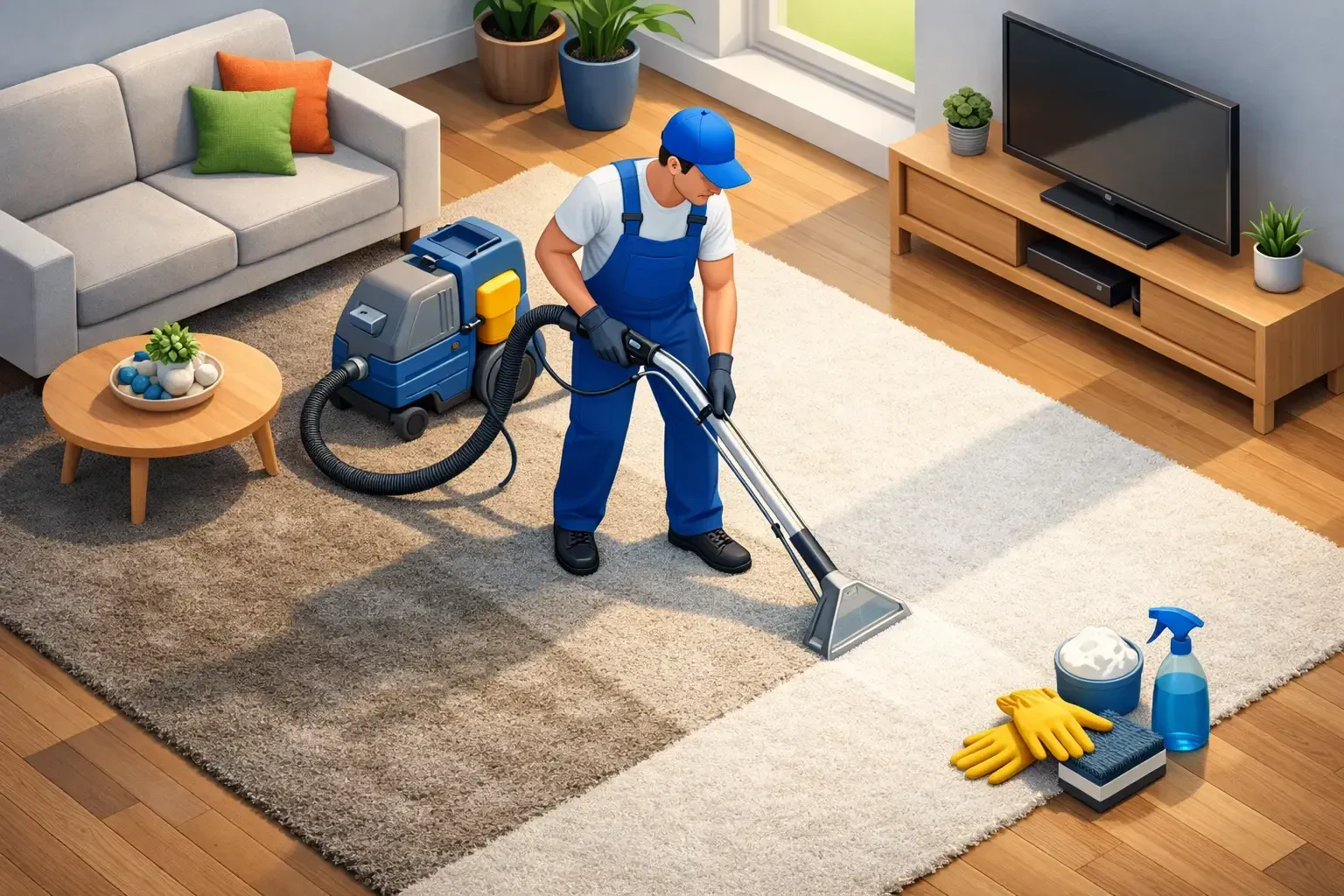
Professional equipment is designed to reach deeper and remove more of what is trapped below the surface. When done on the right schedule, it helps protect the carpet you already paid for instead of letting it age faster than it should.
How often professional carpet cleaning makes sense for different spaces
In a single-adult household with no pets and low traffic, every 12 to 18 months may be enough. If the carpet still looks fresh, has no odor issues, and is vacuumed regularly, stretching the schedule can be reasonable.
For a typical family home, every 6 to 12 months is more realistic. Living rooms, hallways, and bedrooms all collect daily wear, and a yearly cleaning can start to feel too far apart.
In homes with pets, toddlers, or frequent entertaining, every 3 to 6 months is often the sweet spot. That keeps stains, odor, and heavy soil from becoming much harder to remove later.
For rentals between tenants, a professional cleaning is usually worth doing after each move-out. It improves presentation, helps remove odors, and supports better long-term carpet care. Property managers often save money in the long run by cleaning routinely instead of waiting until replacement becomes necessary.
For offices and other commercial spaces, the right frequency depends on how many people use the space and what they track in each day. Customer-facing areas generally need more frequent service than private offices. A maintenance plan works best when it is based on traffic patterns, not guesswork.
Does more frequent cleaning wear out carpet?
This is a common concern, and the answer depends on how the cleaning is done. Proper professional carpet cleaning does not damage carpet when it is performed with the right methods and care. In fact, routine deep cleaning usually helps carpet last longer because it removes abrasive soil before it grinds down the fibers.
What does cause problems is poor technique, overwetting, or leaving behind residue. That is why it helps to work with a company that uses professional methods and safe products, especially in homes with kids, pets, or sensitivity to harsh chemicals.
Eco-friendly cleaning also matters to many families and businesses now. A safer product approach can help reduce harsh chemical exposure while still delivering the deep-clean results people want from a service visit.
The best schedule is the one you will actually keep
Some people wait until the carpet looks bad. By then, the dirt has been building for months and stains are more likely to set. A better approach is to choose a realistic schedule based on your home, your budget, and your traffic level, then stick with it.
If you are unsure where to start, think in simple terms. Light traffic usually means every 12 months. Moderate traffic calls for every 6 to 9 months. Heavy traffic, pets, or commercial use often means every 3 to 6 months. That framework covers most homes and businesses without overcomplicating the decision.
For local families and businesses, ECOsential Clean helps make that schedule easier with dependable service, friendly technicians, and eco-friendly products designed for cleaner, healthier indoor spaces. The goal is not just better-looking carpet. It is a home or workplace that feels fresher the moment you walk in.
If your carpet has lost its color, keeps holding onto odors, or just never seems fully clean anymore, that is usually your sign. A consistent professional cleaning schedule gives dirt and bacteria the boot before they settle in for good.